http://www.ted.com/talks/sugata_mitra_the_child_driven_education.html
TheAnthroGeek
The Study of Humanity’s Geekiest Blog
-
Title: LAWRENCE Cremin’s LEGACY: TRACES OF EDUCATION IN THE ORDINARY BUSINESS OF LIVING
Chair: Michael Scroggins (Teachers College Columbia University)
Organizer: James J Mullooly (CALIFORNIA STATE UNIVERSITY, FRESNO)
Discussant: Raymond P McDermott (Stanford University)Session Abstract: A pertinent legacy of the educational historian Lawrence Cremin for anthropology is to be found within Traditions of American Education (New York: Basic Books, 1977). In this broad work Cremin stakes out an interactionalist position, “From this interactionist view stems the definition of education as purposeful, the conception of the configuration as a patterning of institutions, the view of personality as a biosocial emergence, and the idea of the educative process as a continuum of contemporaneous and successive transactions. (162)” Cremin’s oft quoted definition of education flows directly from this position. Elaborating upon Cremin’s interactionalist definition of education is beneficial for two related reasons. First, as Cremin noted elsewhere, his definition of education is narrower than definitions of enculturation or socialization. An immediate consequence of this narrowed perspective is to focus attention on the purposeful activity of participants and away from hidden process occurring with bounded minds. Second, Cremin’s definition of education lacks a sense of inevitability. Education cannot be automatic, nor can an outcome be pre-determined. Educative interactions are, rather, contingent upon, and open to unforeseen improvisations, interventions and resistance. Interactions are both formed by and forming of activity and must be considered within the moorings of a particular context and a particular purpose. The papers in this panel explore the interaction between unexpected events encountered during the ordinary business of living and the purposefully educative reactions to them. The explanatory power of Cremin’s approach to education throughout the lives of people is clearly illustrated in the wide array of contexts included in this panel. The first three papers focus upon aspects of career development both in the U.S. and abroad. Scroggins describes the applied work of engineers as they navigate the unknown waters of their future livelihood as engineers. Bang focuses on the work of South Korean high school students and their parents as they work to improve their chances at success in university. Santana’s paper illustrates the ongoing work of Mexican wrestlers as they build and maintain their careers in the public domain of Mexican popular culture. The last three papers focus on issues that are more peripheral to career building but are no less important. Van Tiem describes the work of psychotherapists who work with the unpredictable behavior of horses as a means to educating patients about themselves. Wessler’s paper illustrates the educative power that reactions to urban violence can have for children in Harlem. Finally, Mullooly’s paper focuses on unexpected moments in the formative years of students and the significance such moments bring to these students’ future career choices. The session will conclude with a discussion by Raymond McDermott who will link all the papers together through a discussion of Cremin’s theoretical frame.
PAPERS
Engineering Opportunities: Tactics and Appropriation In the Ordinary Business of Selling Yourself
Michael Scroggins (Teachers College Columbia University)
Paper Abstract: In his essay Public Education (1976), Cremin brought attention to those non-school institutions which play a pedagogic role. To condense and restate Cremin’s argument, legion are the institutions which educate while few are the institutions we recognize as educative. Engineering pedagogy is, at its core, based on applied work. This has two immediate consequences, a) within engineering, experience is prized over academic qualifications and b) engineers have an easier time than most professionals slipping between the worlds of private enterprise and the academe. This is another way of saying that engineering, more than most disciplines, has one foot firmly in the business of ordinary life and the other tepidly in the realm of theory. As such, the training of engineers is a productive place to find those institutions which are rarely thought of as educative. I will argue through a case study of an engineering project at a middle tier public university in California that the interaction between two unexpected events a) a change in California’s Master Plan for Higher Education, which has caused a contraction in the variety of lab classes and academic activities available to engineering students and b) the ongoing and persistent wars in Iraq and Afghanistan, which have caused a change in the technical skills required by engineering firms, have together caused a change in the experiences engineering students deem necessary to attract an employer.Lucha Libre: Constraining “Free Struggle” In Contemporary Mexico
Adela L Santana (Independent Researcher)
Paper Abstract: Lucha libre (which translates as “free struggle”) is a spectacle located at the crossroads of combat sports, popular theater and circus. Yet in spite of its comedic element, lucha libre requires an end to each match where winners and losers are clearly distinguished. Additionally, the committed interaction and performance of the public is essential to the ongoing, culturally productive value of lucha libre as a defining spectacle in contemporary Mexico. Even if every spectator knows the rules of the game almost as a religious mantra, these rules are voiced very loudly at the beginning of each match: “these luchadores will fight 2 out of 3 falls without a time limit”. What follows is a spectacle based as much upon the meticulous gym training whereby grapples, falls and conditioning drills are learned as it is on the rigorous mental discipline that is worked by a luchador in order to develop ring knowledge, his/her own particular charisma and an understanding of the audience and how to interact with it. The improvisations, interventions and acts of resistance that occur within this highly bounded space require a complex conceptualization of education that will engage with the intensely malleable significations that are put forth in every match. I will utilize Lawrence Cremin’s theoretical frame to approach the wide spectrum of unpredictable outcomes that incorporate the public as well as the luchadores into a vortex of strenuous physical action, cultural symbolism, gender and body politics as well as inventive conceptions of self and body.Pedagogical Objects: Education In the Context of Equine-Assisted Psychotherapy
Jennifer Margaret Van Tiem (Teachers College)
Paper Abstract: The purpose of this paper is to explore moments and processes of education about the self as an object made available to pedagogical surveillance. In this context, it is imperative that education be “contingent, and open to unforseen improvisations, interventions and resistance,” in order to vivify a kind of symmetry between the work process (therapy) and the object being worked upon (the self). In the context of equine-assisted psychotherapy, a horse mediates this symmetry between therapy and the self. Networks of context-specific artifacts, people, and horses offer a somatic and emotional context and it is through activating aspects of these elements, in a particular order, that therapy is intended to occur. That which brought individuals to the therapy session is rarely pointed to and whatever encouraged attendance is exercised (or exorcised) by a curriculum of lessons made up of particular work that specifically entails practicing seemingly-extravagant techniques with one’s body. At the same time, therapy sessions almost never conform to the planned curriculum and, yet, the work of the therapy is not compromised. Given these observations, equine-assisted psychotherapy offers a revealing context in which to explore and expand upon Cremin’s notion of “the educative process as a continuum of contemporaneous and successive transactions,” as the potential asymmetries offered by the horse raises questions about what qualifies as an educative transaction and process, while also forces attention to that which is “empirically available” in order to be responsible to the uniqueness of the horse.From “Merit” to “Merit(s)”: Unintended Outcomes In South Korean University Admissions
Yookyung Bang (Teachers College Columbia University)
Paper Abstract: In 2007, ten South Korean universities began to implement alternative criteria for student evaluation, and more universities followed the trend soon thereafter. Instead of relying exclusively on standardized test scores and high school grades, these institutions adopted a holistic approach, citing prestigious U.S. universities as their models, in order to “qualitatively” evaluate each student’s “potentials and individual characteristics” and to reduce pressure on students and parents spending much money and time to prepare for the high-stake national standardized test for university entrance. This research explores how South Korean high school students and families navigate the recent changes in university admission policies and how they “informally” educate themselves about the new system in order to gain access to “formal” higher education. During the nine-week study, students and families were observed to attend information sessions held by for-profit private educational institutes and universities and participate in online forums in order to educate themselves about the new definition of “merit.” As Cremin’s notion of education points out, in such educative moments, the produced outcomes may be intended or unintended, and the unintended outcomes “may be more significant than the intended.” As the students and other stakeholders explore and contest the new admission system, a specific and relative notion of individual “merit” emerges in the process.“Ordinary Violence”:Harlem Youth and Everyday Education
Sarah Wessler (Teachers College Columbia University)
Paper Abstract: This research explores how adolescents acquire safety information in informal settings outside of education institutions, clinics and community programs. Homicide is the leading cause of death among youth aged 15 to 19 in New York City and Harlem has one of the highest preventable mortality rates in the United States. Harlem teens report frequent exposure to violence in schools and neighborhoods and have high school dropout rates above the national average. Preliminary research findings explore strategies used by youth to make sense of ordinary violence: one young woman describes the annual ritual practice to honor a murdered loved one, another young man reveals his methods to prevent harassment by local police, and a third teen reads an online news report to separate fact and fiction of a brutal neighborhood shooting that resulted in the death of an ex-boyfriend. During this three-month pilot study, adolescents living in Harlem were observed at home watching television, hanging out with friends, and communicating with one another via social networking tools and websites. Youth shared anecdotes and discourses about neighborhood violence and constantly developed strategies to ensure health and safety. Findings from this research will provide educators, administrators and policymakers with a clearer understanding of how safety information among urban youth is learned and disseminated informally. Through these everyday conversations and practices we can more adequately bridge discourses between safety and disparity to address the complex needs of urban adolescents.Unexpected Education: Understanding the STEM Pipeline In California’s Central Valley
James J Mullooly (CALIFORNIA STATE UNIVERSITY, FRESNO)
Paper Abstract: There has been considerable focus on the current underrepresentation of U.S. citizens – and minorities in particular – in STEM fields (i.e., science, technology, engineering, and mathematics). In response to this trend, a number of efforts have been designed to encourage U.S. students of all ages, classes and ethnicities to become more interested in STEM areas. The current study illustrates how Lawrence Cremin’s approach to education sheds light on an improved understanding of this problem. Cremin’s definition of education “recognizes that there is often conflict between what educators are trying to teach and what is learned from the ordinary business of living” (1976). Cremin’s implicit dichotomy between “other phenomena” and “ordinary phenomena” moves away from the classic dichotomies of formal/informal education, school/home, best/worst practices by shifting the emphasis from approaches entrapped in “opportunities to learn” methodologies to approaches which are open to the unknown and how to prepare students for such unknowns. The presentation reports on two ethnographic investigations of the sorts of “unexpected educations” Cremin’s work accommodates. The first looks at the efforts of one engineering students’ work at organizing a team of poor, rural Latino middle school students to compete in a large robotics competition in their region. The second looks at the routine activities of teachers and students at an urban public high school that is incorporating a focus on “unexpected educations” through the implementation of a novel pedagogical model that offers a variety of career pathways to students. -
“Hackacademic” has a variety of meanings. In my current use of it here, I’m aiming for “hacks for the academic”.
I spend most of my professional time, teaching or preparing to teach. I got an Ipad with the goal that I would strive to have it replace my laptop for in class teaching use. On that front, I have found a few “hacks” that fellow Ipad using teachers may find interesting.
To use an Ipad to present lectures you need to purchase:
1. Mobile keynote for $10.00
2. Ipad VGA connector for about $30.00
3. Perfect Browser, an itunes app for around $3.00.
Perfect Browser is a web browser like Safari with one important added feature: It allows you to project web sites onto the VGA projector.Limitations:
-No Powerpoints, and no video clips unless they are embedded in the Keynote.
-Safari web browsing is NOT allowed on the VGA projector (hence the need for Prefect Browser). -
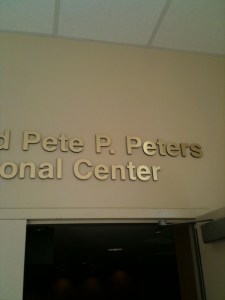 Tomorrow TheAnthroGuys are giving a presentation about our core competency: Analytic Induction that gets practiced in search of opportunities to “add value“.
This is a rather clunky way to express what we do but we are still sharpening our ‘laser focus’ so bear with us. Once we reach Gladwell’s 10,000 hours, I’m sure it will sound better. We will be in a lecture hall of entrepreneurship students at Fresno State. Incidentally, the name of the lecture hall is, “Pete P Peters”. As I often tell students of ethnography, reality is more interesting than fiction once you start actually noticing it.
Ethnographers and entrepreneurs share a relience on inductive skills to accomplish their goals. Once this is understood, we can learn a great deal from each other.
Tomorrow our presentation about all of this that can be found here: Ethnographic (Inductive) Opportunity Analysis Presentation.
In a few weeks, we will return to their class to continue this discussion. Our hope is that some – if not all – of these students will see the value of this skill set.
-
“free at last free at last thank god almighty i am free at last”
-
Practicing Anthropology in the Shelves: Designing Academic Libraries via Ethnography
Presentation at the 108th Annual Meeting of the American Anthropological Association, Philadelphia PA
Organizer: James Mullooly (CSU-Fresno)
Chair : Henry Delcore (CSU-Fresno)Session Date & Time: 12/04/2009, 04:00:00PM – 05:45:00PM Room: Room 408, Session ID #: 5311
Session Title: Practicing Anthropology in the Shelves: Designing Academic Libraries via EthnographySession Abstract: Anthropology is most relevant to the public, when it improves the lives of non-anthropologists. Practicing anthropology, as a type of research done to solve practical problems with relevant stakeholders who stand to gain or lose from a project, has a long tradition outside academia. Conversely, practicing anthropology on a college campus, across disciplines is a relatively recent phenomenon. Responding to this year’s theme, the papers on this panel speak to an “academic public” comprised of non-anthropologists across college campuses. Acknowledging one potential “end” of anthropology as an independent university discipline, panelists illustrate a bright future for practicing anthropology amongst this “academic public”.
Using ethnography to empirically investigate the factors that influence human relations between each other and their environment, practicing anthropology helps provide stakeholders invested and interested in this research to adopt effective and efficient responses to the problems relevant to them. California State University Fresno’s Institute of Public Anthropology (IPA) is an organization dedicated to improving the quality of life in California’s Central Valley through practicing and design anthropology. By utilizing a mix of traditional and innovative methodologies, members of the IPA are able to make ethnographic approaches relevant to areas normally ignored by academic anthropology programs. The papers on this panel represent some of the latest research on usability based upon a 15 month ethnographic investigation of CSU-Fresno’s Henry Madden Library.
In the first paper, Visser presents the context of the study, illuminating the relevance and use of traditional university libraries to “21st century students”. The following two papers by Barela, Arnold and Dotson provide a detailed explication of the background and methods of this study while emphasizing the strategies involved in ascertaining emic conceptualizations of “scholarship” (Barela) and “library resources” (Arnold and Dotson) by predominantly “first generation” college students. The next pair of papers by Mullooly, Ruwe and Scroggins explore some of the initial findings and that have evolved from the Library Study in terms of student/librarian disjunctures: disjunctures of the meaning of “reference” (Mullooly and Ruwe) and of perception of time (Scroggins). The final paper by Delcore concludes the presentations with a discussion of the relevance of this sort of investigation to the evolution of design anthropology in relation to a variety of publics. Nancy Fried Foster, a leading voice in anthropological investigations of libraries, will discuss the papers at the close of the session.
The papers represent practicing efforts that analyze pressing issues in the contexts of scholarship, design, integration and innovation. Each presentation will be a rapid, data rich presentation (following the Pecha Kucha format) which will allow for an open discussion to follow including a critical analysis of the benefits of such approaches as well as the potential problems inherent in facing an “academic public”.
Key words: design anthropology, usability, practicing anthropology
Papers:
Understanding “the Public”: The 21st Century University Student and the University Library – Marjorie Visser (New School for Social Research) University institutions must make themselves relevant in the educational experience of the students who utilize them. In the 21st century, an era marked by globalization and rapid technological advancement, perhaps no university institution struggles more to make their services and space relevant than the academic library. This paper seeks to explore the “21st century university student” and the relevance of the academic library in their lives. Through an analysis of the established literature of multiple disciplines and survey data, this paper highlights the dominant theoretical and practical paradigms surrounding this population, from which policies and programs in universities throughout the nation have been adopted to better serve this “new public”. We argue that such research, found in the sociology, psychology, public policy, and educational administration literatures, has helped to provide a broad macro level understanding of how to better serve this population. Yet, little is known about the effectiveness and utilization of these resources or how students perceive the relevance of traditional university institutions to their academic experience, presenting a unique gap in the research at the micro-level.This study elucidates an understanding of the relevance of the academic library vis-à-vis the 21st century student and highlights the implications to education policy, program design, and implementation which they present. Moreover, in the critical intersections of applied anthropology, organizational studies, and education policy this paper highlights the critical value of ethnography to other disciplines outside of anthropology.
Inspiration over Confirmation: Redefining Academic Libraries in Relation to Redefined Student – Alecia Barela (Institute of Public Anthropology)
The Institute of Public Anthropology (IPA) began investigating student scholarship at CSU Fresno in order to develop strategies for the Henry Madden Library to better incorporate itself into student life. One of the primary challenges confronting the project was that the Library Study did not involve a new public, but a rather, a changed one. The “typical student” in American colleges has changed drastically over the decades and has in turn transformed notions of scholarship. This change was accelerated by changes in mass media and the Internet. Consequently, members of the IPA attempted a variety of novel methodological approaches in an effort to generate inspirations that could better inform the design of library services rather than confirmations of previously defined assumptions of how best to serve “today’s student”. Both traditional and innovative methods were incorporated in the investigation. To discern student interaction with the newly constructed library, ethnographic observations, informal interviews, auto-ethnography, guerrilla ethnography and visual anthropology were applied in addition to methods stemming from design anthropology. The study’s findings allowed (discussed in detailed in other papers) for the production of new ideas for improving library services and assimilating them into student life. In conclusion, the Library Study had demonstrated the need for formulating and utilizing anthropological alternatives to deductive methods as a means to overcoming institutional bias.Snapshots of Student Life: Adopting the Diary-Interview Method – Kim Arnold and Ashlee Dotson (California State University, Fresno)
In conjunction with the 105 million dollar renovation of the Henry Madden Library, the Institute of Public Anthropology (IPA) has engaged in a year long study of student scholarship on the CSU Fresno campus. Through the Library Study, the IPA has adopted methods from Ethnomethodology to the emerging field of Design Anthropology. In particular, an adaptation of Zimmerman and Wieder’s Diary-Interview Method (1977), has been employed to provide a better depiction of the experience of CSU-Fresno students. Students were recruited from general education undergraduate classes and asked to participate in a study in which each individual was given a disposable camera, a jottings book, a map of campus, and a list of twenty things to photograph. The participants were then interviewed. These interviews were held in the participants’ homes which allowed for a more intimate, natural dialogue. Information taken from the interviews were analyzed with Atlasti. This paper explores our adaptation of Zimmerman and Weider’s Diary-Interview Method and discusses how this method has contributed to furthering understanding of student life at CSU Fresno as it pertains to the haecceity of student scholarship both on and off campus.Reference or Reverence?: Semiotic Reflections on Library Perceptions – James Mullooly and Dalitso Ruwe (California State University, Fresno) Are academic libraries revered temples of sacred knowledge, where gatekeepers uphold tradition or are they (similar to failing bookstores) impediments to students’ workflow due to poor management or an absence of basic customer service skills? Provocative questions like this have inspired our investigation of the assumption that CSU-Fresno students and library faculty and staff share similar perceptions of their academic library. Triangulated findings based on interviews, observations and workshops reveal a shared misunderstanding that often reveals itself as frustration on the part of librarians and reduced productivity on the part of students. Working from a theoretical framing exercise we developed – where a continuum of symbolic values was built between the poles of high (reverence) and low (reference) value – members of our research team were able to investigate possible generational, ethnic and socioeconomic gaps between academic librarians and their public. The idea of depicting academic libraries as sacred temples of truth is not difficult in light of their history. For example, the Annuals of the Bodelian Library at Oxford report that the chief librarian was required to be unmarried when accepting his role up until the statute was altered in 1856 (Macray 1868). On the other extreme, the idea of judging an academic library based on service economy standards is plausible, particularly for a student body whose majority includes first generation college attending students. This paper concludes with our suggestions at ameliorating this dilemma via the introduction of “student advocates”.
Hot and Cold Chronologies: Accommodating Student Taskscapes in Library 2.0 – Michael Scroggins (Teachers College, Columbia U) This paper offers an oblique look into the issues surrounding academic libraries and the Library 2.0 initiative by using data gathered during an exploratory workshop to shed light on the contested terrain of value and service. The workshop took place during a two year span when the campus library was closed for (re)construction. Several of the participants had never physically experienced an academic library, thus the workshop focused on the library as past, future and imagined space. The workshop was ostensibly held to discover potential new library services, but analysis revealed more than economic calculations over value and service are at stake within an academic library. Findings indicate that library use over the course of an academic term follows closely the logic of what Ingold terms taskscape (1993). Students organize their time and energies in relation to situated tasks, events, and locations accountable to both physical and social boundaries. Other findings indicate students recognize and value their place in the academic hierarchy when related to the production of scholarship, viewing themselves and their peers not as passive consumers but rather as emerging scholars within an academic polity. The organization of academic work into periods of intense activity and relative lulls problematizes the delivery of services along a corporate model and the contention that users/patrons/customers are the proper unit of measurement in an academic library.
Design Anthropology as User-Centered Advocacy on Campus – Henry Delcore (California State University, Fresno) Design anthropology has emerged as a major mode of public anthropology. The ambitions of design anthropologists range from specific project-driven insights for the design of products and services, to seeking “to understand the role of design artifacts and processes in defining what it means to be human (e.g., human nature)” (Tunstall). These ambitions have taken anthropologists into the public through work for and with the non-profit, for-profit and public sector actors. But perhaps the greatest public ambition of design anthropology is to aid in the design of products and services that better meet the needs and desires of users. Indeed, many design anthropologists see themselves as advocates for users. In this paper, I put our study of Fresno State’s Henry Madden Library into the context of design anthropology as public anthropology practice. I detail our project-specific ambitions, and review some of the design insights we delivered and their expression in re-designed library services and spaces. I also detail how a group of professors, librarians, and student researchers worked together to better understand student life and to advocate for design solutions that better serve student users. I conclude by exploring the potential for campus-based anthropologists to understand various campus user groups, inform the design of campus services, and advocate for users who may otherwise lack a voice in campus life.
-
Mind Mapping comes to mind every few months. I hear about it; think it sounds like yet another good productivity technology I should embrace and then I forget about it because I don’t get it. It was not that I could not “get it” at a conceptual level, but that I could never see how mind mapping could seamlessly fit into my workflow.
But thanks to an article, which led to to the blog by Chuck Frey I now can see it.
I added the first few lines of the article here to give you an idea where he’s going with this:
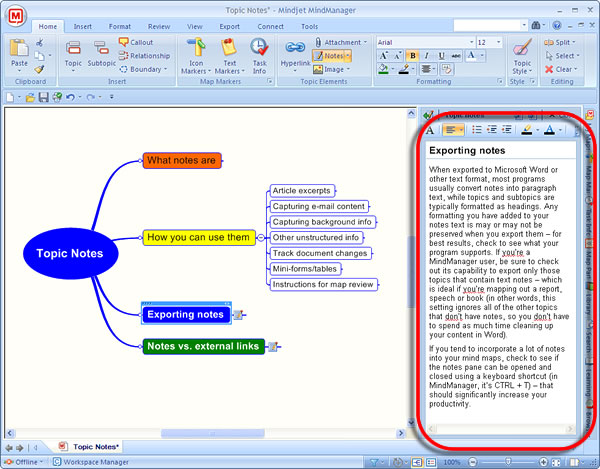
“How to get the most out of topic notes in your mind maps”.Jan 23rd, 2009 | By Chuck Frey | Category: Mind Mapping Basics
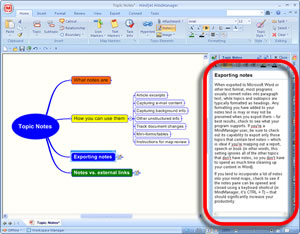 If you want to become a more effective mind mapper, then it’s essential that you become familiar with your program’s topic notes feature. Notes should be an integral part of all but the simplest mind maps. They represent a great way to store additional information, without having a clutter up your view of the mind map, and thus help to prevent information overload...”
 Continue reading, “How to get the most out of topic notes in your mind maps”.
-
Is your head in the clouds?

How about your data? Worse yet, is it in his?—>
Software as a Service (SaaS), sometimes referred to as “Cloud Computing”, was the topic of a recent meeting I attended. Ian Duffield, COO of Decipher, Inc. Survey Reporting and Data Collection lead a discussion revolving around the implications of SaaS as well as current applications in the Fresno, CA area. From what I gathered, SaaS is here to stay and is a real success in local industry.

So what is this all about anyway? Many of us are using “web based” email from Yahoo or Gmail and more and more of us are watching TV on hulu. These are SaaS.

To Rent or to Buy
Beyond the “geeky” technical difference between having your own tech team or having someone else solve all of those problems, there lies two distinct (and competing) business models: To rent or to buy? To illustrate these models in terms of mass market personal use, let’s talk about Rhapsody’s subscription model and Itunes‘ purchasing model. Rhapsody is a service that allows you (for about $14 a month) to listen to all the music you want on a few devices. You can fill up, empty and refill your MP3 player as often as you like. Conversely, with Itunes, you buy one song then another etc.. Although Itunes is far more profitable than Rhapsody at the moment, this “Subscription” model is most likely the wave of the future.
This brings us back to “Skynet” the evil fictional monster in the machine that made the Terminator films such big hits. If we are to embrace “Cloud Computing” more fully, we are going to have to let go of the notion that holding information is safer than allowing others (often machines) to hold it for us.
-
Jason, a clever colleague of mine, found an interesting article that reminded me of Claude Lévi-Strauss’ use of bricolage [French for, “fiddle, tinker” and, by extension, “make creative and resourceful use of whatever materials are to hand (regardless of their original purpose)].

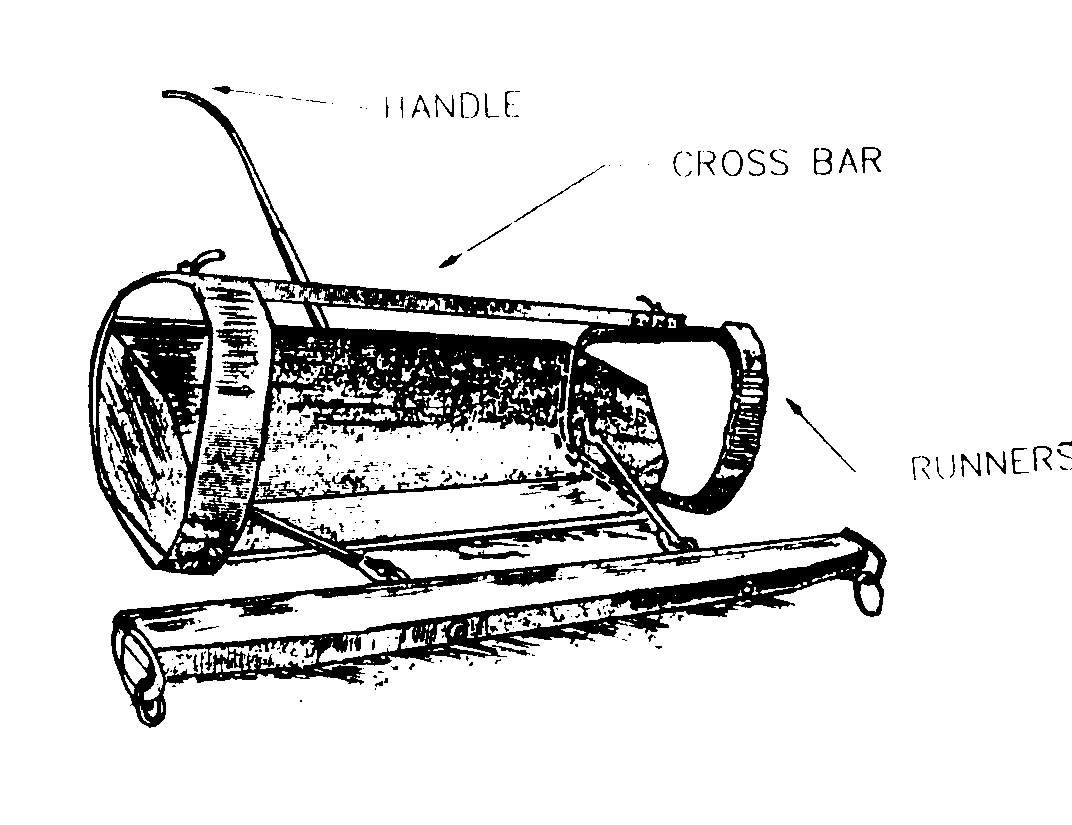
The Fresno Scraper Paul Boutin describes a variety of simple solutions to complex problems that typify the sort of ingenuity that launched “The Fresno Scraper” and will pull us out of the challenges currently facing us in the San Joaquin Valley. This sort of “routine applied induction” or is occurring around us all the time but rarely celebrated. In light of the growing challenges we all keep reading about (e.g., this story of Mendota’s water problems), we need to start hearing more of these stories of applied cleverness to balance things out.
Paul Boutin states this idea better than I could in his article:
Today’s shaky economy is likely to produce many more such tricks. “In postwar Japan, the economy wasn’t doing so great, so you couldn’t get everyday-use items like household cleaners,” says Lisa Katayama, author of “Urawaza,” a book named after the Japanese term for clever lifestyle tips and tricks. “So people looked for ways to do with what they had.” via Basics – Low-Tech Fixes for High-Tech Problems – NYTimes.com.
-
 I sort of made it on the Oprah show; Well actually that is not true. What is true is that her website mentioned my new apparent “tribal lifestyle” as they are considering it. The story, by Jeanie Lerche Davis is from her byline called Single and Loving It.
 “Cohousing” is one answer. It’s a form of group housing much like a ’60s commune, but yuppie-style. These are condo-style developments built around a “common area” with kitchen, dining, laundry, exercise, and children’s playroom facilities. Cohousing communities are typically designed to resemble old-fashioned neighborhoods. Members get together often to share meals, socialize, and handle the ordinary stuff of daily living although they live in individual units.
“Intentional community” is an inclusive term for ecovillages, cohousing, residential land trusts, communes, student co-ops, farms, urban housing cooperatives, and other projects. Intentional communities can be found all over the U.S. and Europe, their growth spurred by the Internet. Typically, community members jointly own land that has multiple dwellings. Frequently, members share a common bond—a religious, political, or social philosophy that brings them together…….via Single and Loving It.
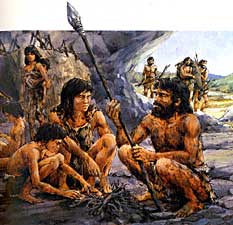
The above is all fairly true in my case but the comparison to a “tribe” is not very helpful. Call me a “hippie” or a “commie” if you like, but to then claim that we live at a very simplistic level sociopolitical complexity is way off base. I’m not taking offense at being compared to being a member of a “band-level society”. Rather, I feel a need to point out that our complex society allows for many small “pockets of temporary simplicity” and that these pockets are temporary only.
“Urban tribes form in a vacuum,” Watters (author of the book Urban Tribes) tells WebMD. “Our generation has not joined the traditional social organizations our parents did, the churches and civic groups. We don’t stay in our jobs as long. That leads to a social vacuum, and humans don’t do well in a social vacuum. Something will fill it. That’s where Thanksgiving dinners started out as stopgap measure, then 10 years later, we realize these friends have become our family.”
 Read on at Single and Loving It. But if you are hoping to find any systematic anthropology there, don’t hold your breath. Now that I have lived in a cohousing community for a couple on months, I can echo Kermit’s point that “it ain’t always easy being green”. The assumption that I’m a churchless single drifting from job to job smarts. I’m active in my church, I’ve had the same job for the past six years (with no plan on departing) and have been married for over ten years (and have a couple kids to boot).
I guess my beef is mostly with Watters who, in an effort to make a point, has been a bit too reductive for my taste. This is one angry villager who is standing up for his subaltern status!

 TheAnthroGeek
You must be logged in to post a comment.